OBJECTIVE
To solve the reduction in efficiency that solar panels had due to soiling, Inti-Tech presented an autonomous solar robot that cleaned solar panels. The company hired me to leap their robots from a proof-of-concept into an industrial scale device. The robot had to work in the Atacama desert, an environment so hazardous that it has been compared to Mars. In addition, the robot had to be clean without water, a scarce resource in a desert; and required a modular design that adapted to any solar panel disposition.
The results were tested by DICTUC, the certification laboratory of Pontificia Universidad Catolica de Chile. And Laborelec, the certification laboratory of Engie, through an accelerated aging test that evaluated the robot’s performance and its effect over the panels in a twenty years simulation.
TECHNICAL DETAILS
I worked as part of the R&D team, developing the electromechanical systems. My main contributions were:
The modular architecture design enabled the robot to adapt to diferent solar array dispositions. This system was composed of two independent modules providing side traction to the robots.
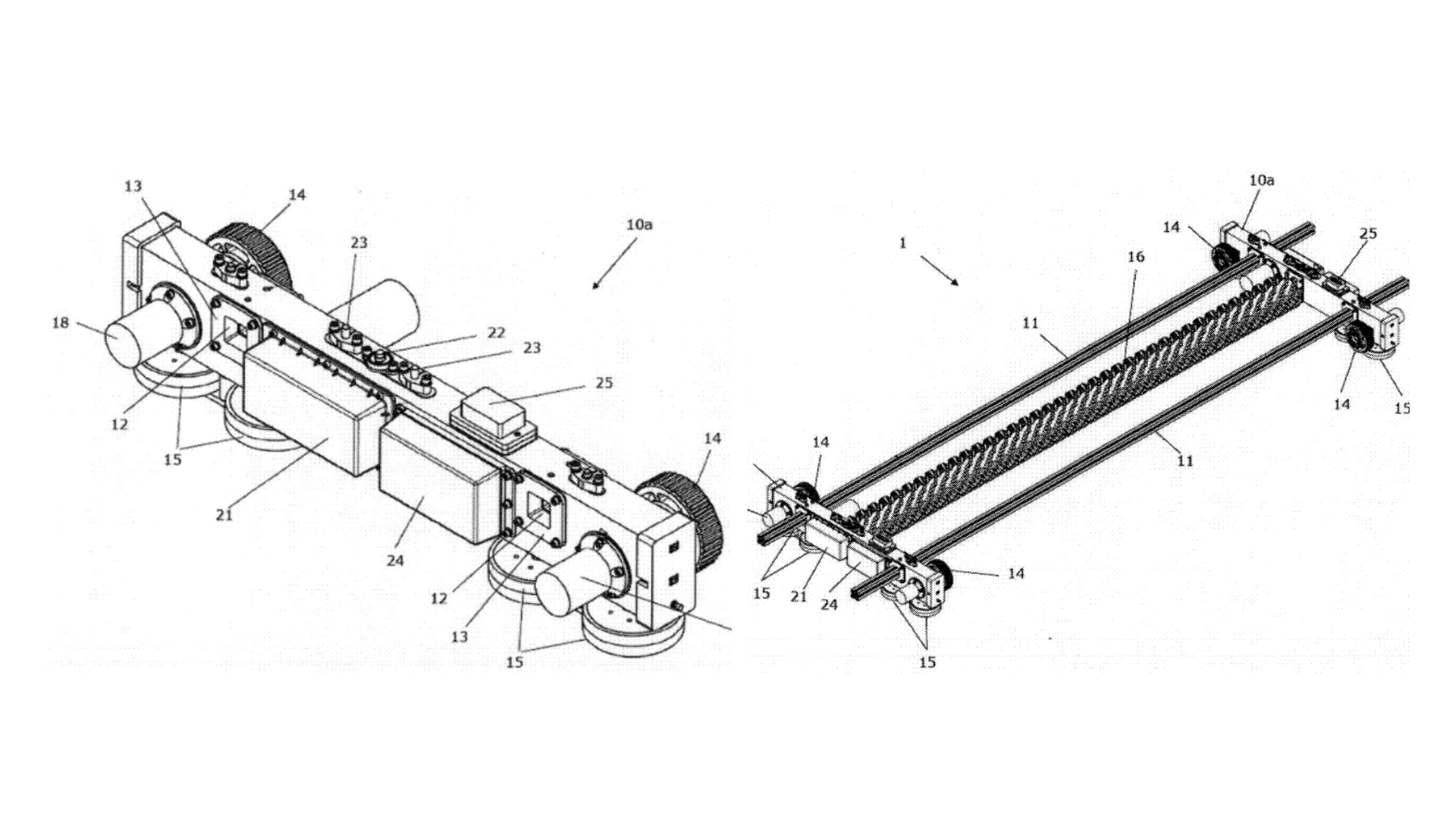
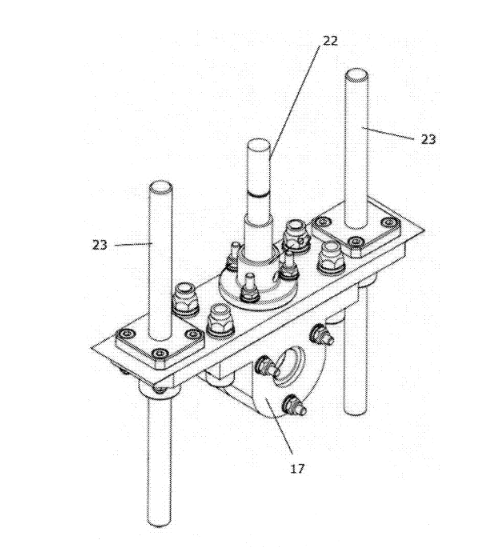
The development of a closed-loop system that can vary the pressure between the cleaning element over the solar panel. This system aims to avoid the robots damaging the panels.
Build a parametric program that enabled the fast selection of materials and geometries for the cleaning element. The cleaning element was subject to high-speed rotations; therefore, deflection of this component resulted in vibrations on the robot. I built a program that received the cleaning component’s length, material, and geometry and delivered its expected performance.
I designed an electromagnetic self-aligning system that enabled autonomous charging when the robots ran out of battery. I also developed the module for the circuit board that detected when the robot was in the charging station and changed the battery’s power supply to start the charging phase.
RESULTS
The robot overcame twenty years accelerated aging test conducted at Pampa Camarones. Showing outstanding mechanical performance. Moreover, inspections found no damage in the panels over the project’s scope. Finally, the cleaned array showed to be more efficient than the un-cleaned panels.
Currently the robots are being produced at an industrial scale and comercialized all over LATAM.